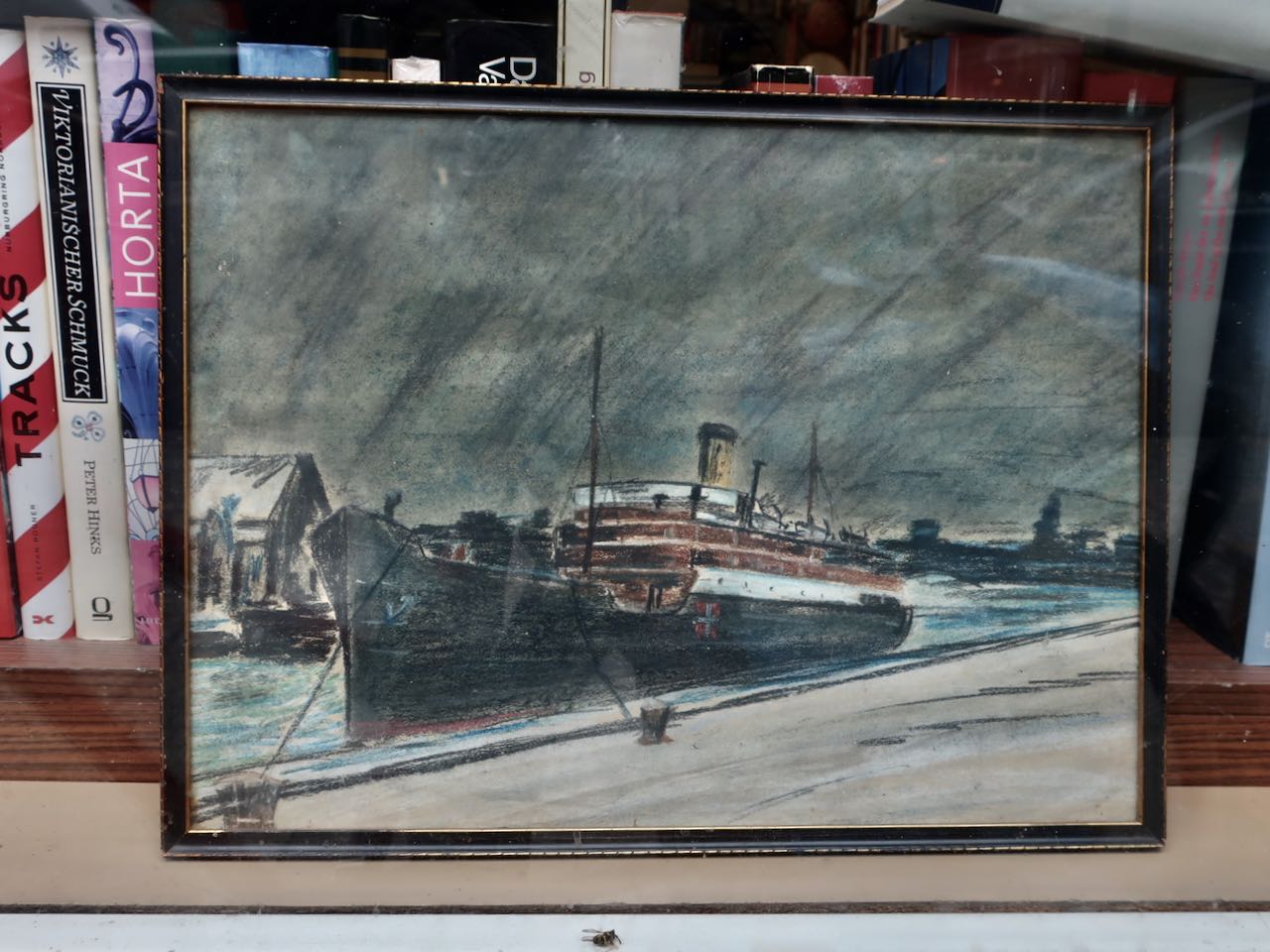
Norbert’s shop window at Zeil 24 in Frankfurt am Main
Here are informations and questions of my emails to Norway.
Curator Bård Gram Økland from Bergen’s Sjøfartsmuseum responds on December 9th:
I receive a sensitive answer from the “Trondheim Art Museum” – plus enthusiasts‘ addresses
Even without Facebook, I connect with people. On December 17th, the webmaster of the association „Norskeskip“ wrote to me:
I have seen your photo/ painting and this looks like one of the ships that travelled the Coast of Norway with mail and passangers. I will guess late 1920 – 1930 and throught the war due to the Norwegian flag-. I will take a guess that its maybe a ship belonging to The Bergenske Dampskipselskap AS (Bergenske Dampfschiffgesellschaft AG). Have a merry Christmas“
The website of „Bergenske Dampskipselskap AS“ offers a glimpse into Norwegian coastal shipping and more! See for yourself!
(https://www.timetableimages.com/maritime/images/bergen.htm)
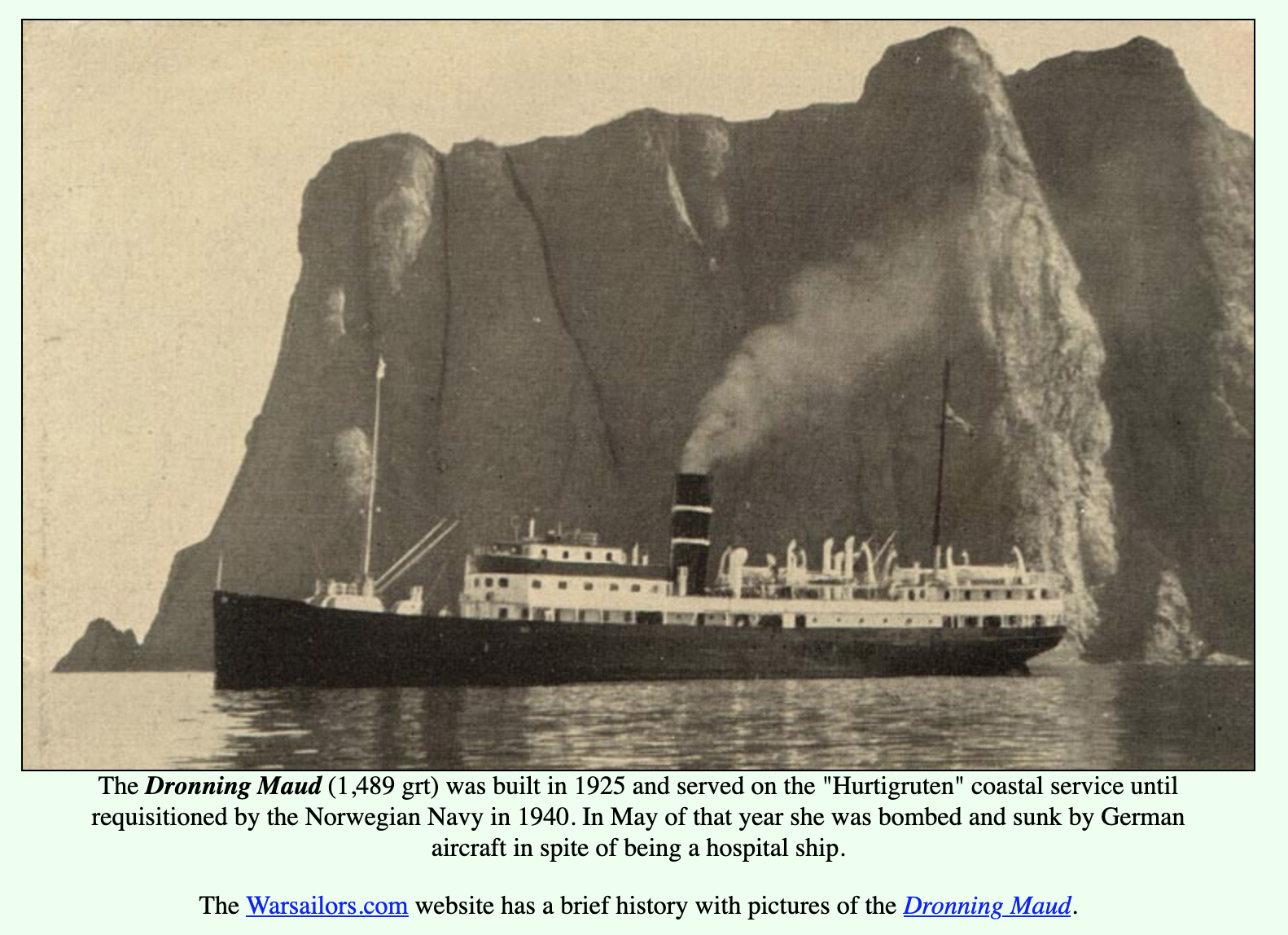
Source : timetableimages.com
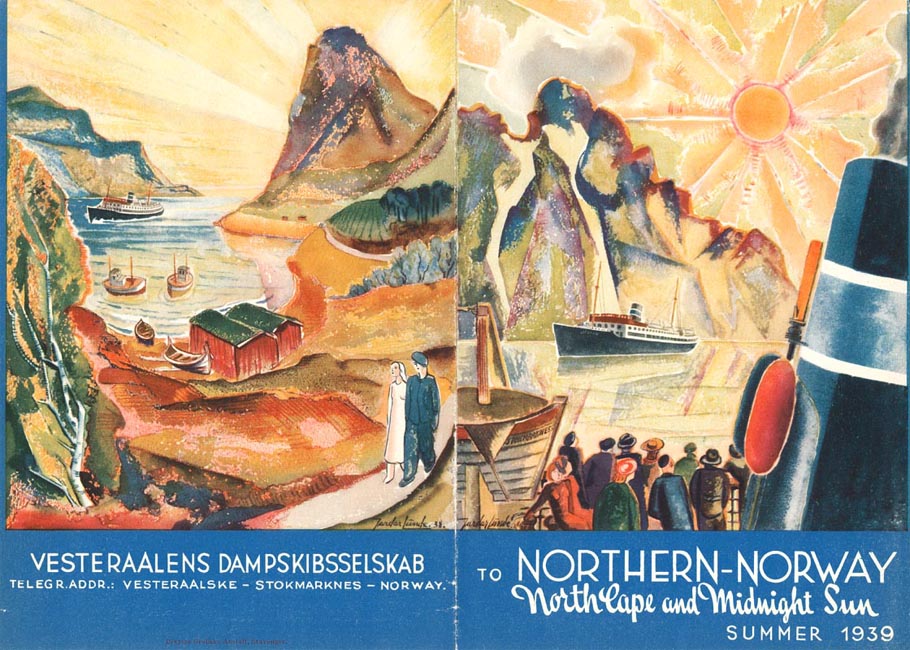
Source : vest39a
The history of Hurtigruten shipping according to de.wikipedia.org:
The en.wikipedia.org article is structured differently, and as they recommend to consult the German-language page, I prefer simply to translate
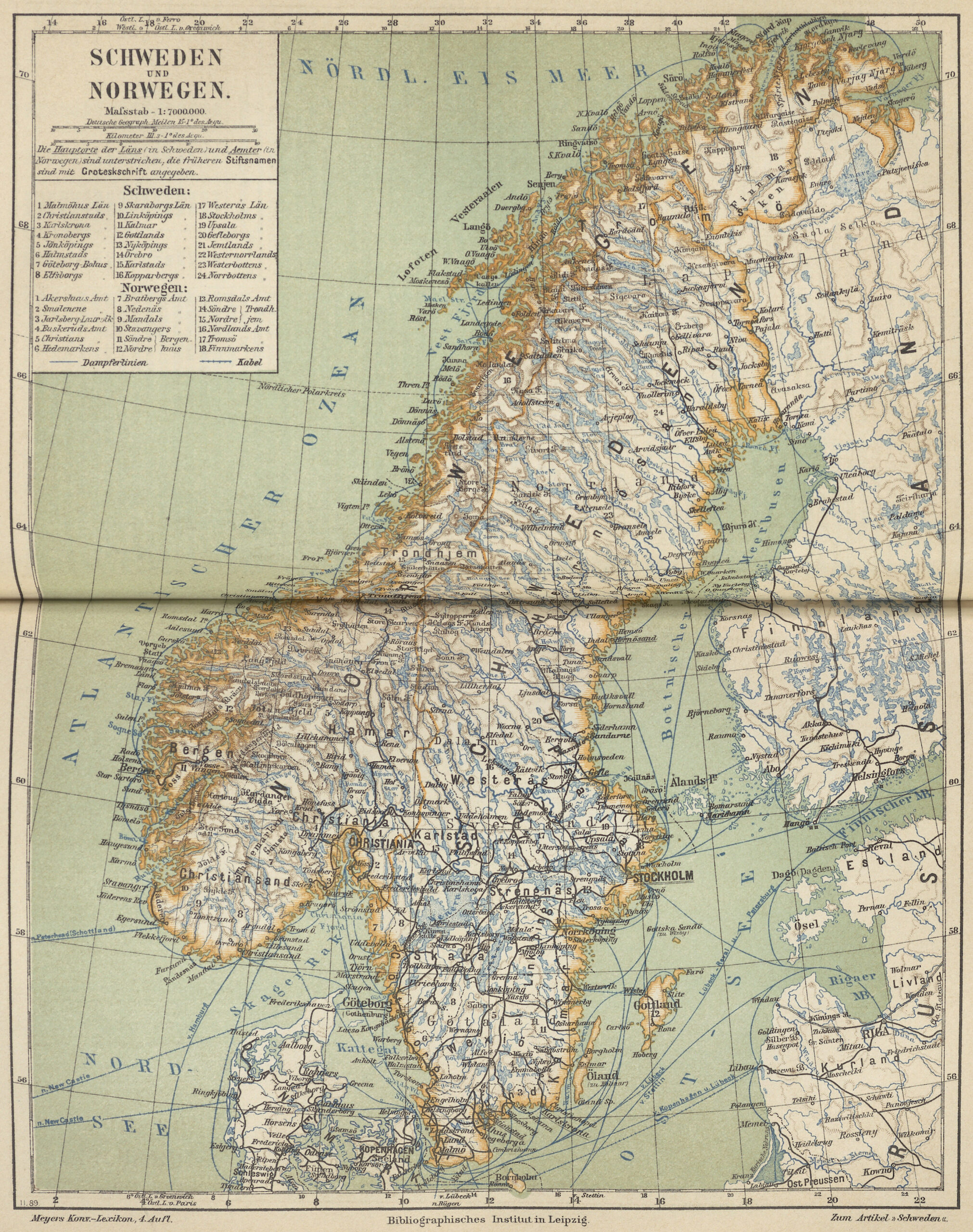
Sweden_and_Norway_MKL_Bd._14_130535988-scaled.jpg (wikimedia) CLICK TWICE TO ENLARGE !
Shipping connections along the west coast of Norway (map circa 1890) (wikimedia, click to enlarge) To understand the importance and necessity of the scheduled service along the Norwegian coast, it is helpful to consider the country’s geographical situation: Modern-day Norway stretches approximately 2,650 kilometers from north to south. Historically, it was the southern part of the country, favored by a relatively mild climate, that dominated in terms of both population and economic power. The coastal settlements and communities in the north of the country, which depended on fishing in the fish-rich waters of the Lofoten, Vesterålen, and Barents Seas, lacked suitable transport routes, especially for the landed fish, but also for basic supplies of goods and commodities that could not be produced locally. For example, from the beginning of the 19th century, there were only sporadic connections between the Lofoten archipelago in the far north and the trading metropolis of Bergen. From 1870, the Hamburg route operated along the coast. However, especially during the long winters, the entire north of the country was practically cut off from the outside world.
The Norwegian government recognized this north-south divide and sought ways to improve transport connections to the north. With a total coastline of 83,283 kilometers, the government focused on merchant shipping. From 1875 onwards, based on existing, smaller shipping lines, initial plans were developed for a regular, state-subsidized shipping service between Stavanger and Bergen in the south and the larger coastal towns in northern Norway.
Beginnings of Hurtigruten

Two more Hurtigruten routes followed, so that by the turn of the century there were three postal ship routes: The first ran from Trondheim to Hammerfest, the second from Bergen to Hammerfest, and the third from Hammerfest eastward to Vadsø – this last route was extended in 1908 to its current terminus, Kirkenes. These routes were now served twice a week – summer and winter. This fundamentally changed life for the inhabitants of the rugged coastal region of northern Norway. The Hurtigruten shaped and united the country. The arduous overland route through the craggy landscape could now be avoided.
In 1898, the route had been extended south beyond Bergen to Stavanger. However, by 1919, road and rail connections in the more densely populated south of the country had been so extensively developed that postal ship service was discontinued in this area. Bergen was and remained the southern starting and turning point of the route.
In the summer of 1922, the Risøyrenna – the Risørinne, a navigable, natural narrow waterway between the Vesterålen islands of Andøya and Hinnøya – was inaugurated. This route is still part of the ships‘ route today. From June 1, 1936, the three former lines were combined into a single, continuous connection linking Bergen in the south with Kirkenes in the north. From then on, a daily departure could be guaranteed with 14 ships from six shipping companies.
World War II and Post-War Period
During the two World Wars, the second of which had particularly devastating consequences for the communities in northern Norway with the occupation of the country, scheduled coastal express services were largely impossible. Nevertheless, Hurtigruten ships were used for coastal transport and troop transport; and in some cases, scheduled services could also be maintained. The period from 1940 to 1945 also saw the majority of ship losses and accidents. To maintain the vital supply lines to communities in the north, the shipping companies, after their Hurtigruten ships were either confiscated or wrecked, resorted to using small cargo ships and fishing cutters as transport vessels on the Hurtigruten route between 1940 and 1945. The Erling Jarl, commissioned in 1949 After the end of World War II, only 3 of the original 14 ships were seaworthy. A large-scale, government-supported shipbuilding program enabled daily service between Trondheim and Hammerfest from 1950 onwards. By 1956, a total of ten nearly identical ships had been commissioned, allowing for the re-establishment of a regular liner service.[6] [6] While the line initially used ordinary, often second-hand steamships, this series marked the first deployment of a special ship type developed specifically for Hurtigruten. Each subsequent generation of ships incorporated new developments and experience gained from previous types. As a result, the appearance and design of the ships have changed considerably; they are still ship types specifically designed for this service. (…) January 15, 2026
World War II and Post-War Period

15.1.2026